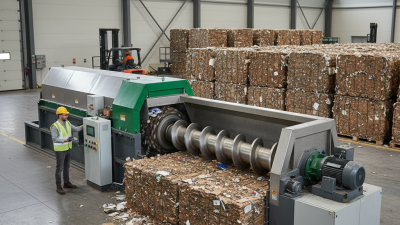
Picking out the right Auger Compactor is super important if you want your waste management to actually work smoothly. Did you know that, according to a 2022 report by Waste Management Industry Experts, being efficient with waste compression can cut down landfill space by up to 30%? Crazy, right? That’s why it’s so crucial to choose good quality equipment that really fits your specific needs.
Now, Auger Compactors are pretty cool — their spiral design helps pack waste tightly, and they also help keep costs down. In fact, a study from the Solid Waste Association showed these compactors can save you up to 15% on labor costs compared to traditional models. But, here’s the thing — picking the wrong one can lead to all sorts of issues like inefficiencies or unexpected downtime, which nobody wants.
Honestly, if you don’t have enough info, making the right choice can be tricky. It’s really important to understand what kind of waste you’re dealing with and how much of it there is. Not all Auger Compactors are the same either — sometimes, going with the cheapest option isn’t the smartest move. The trick is to find a good balance between price, reliability, and performance so you end up with a machine that actually works for you, not against you.
Factors to Consider When Selecting an Auger Compactor
Selecting the right auger compactor requires careful consideration of several important factors. First, think about the size and capacity of the machine. An Auger Trash Compactor with a high compaction ratio can effectively reduce waste volume while maintaining processing efficiency. According to industry reports, a well-chosen compactor can reduce waste by up to 80%. This can lead to significant cost savings in waste management.
Another critical factor is the material type you'll be compacting. Some auger compactors are designed for specific materials, such as organic waste or recyclable materials. Understanding your needs will ensure you select a compactor that performs optimally. If you frequently deal with mixed waste, look for models designed for versatility.
Tip: Evaluate the power source of the compactor. Diesel-powered models pack more power but require more maintenance. Electric auger compactors are quieter and cleaner, ideal for urban areas.
Maintenance considerations are also essential. Compactors require regular checks to ensure long-term reliability. A poorly maintained auger trash compactor can lead to downtime and increased costs. This is especially reflected in the industry where reports show that maintenance issues account for up to 25% of operational costs.
Tip: Regularly schedule maintenance checks. This proactive approach can avoid unexpected failures. Understanding these factors helps in making a wise investment in the right auger compactor.
Understanding Different Types of Auger Compactors Available in 2026
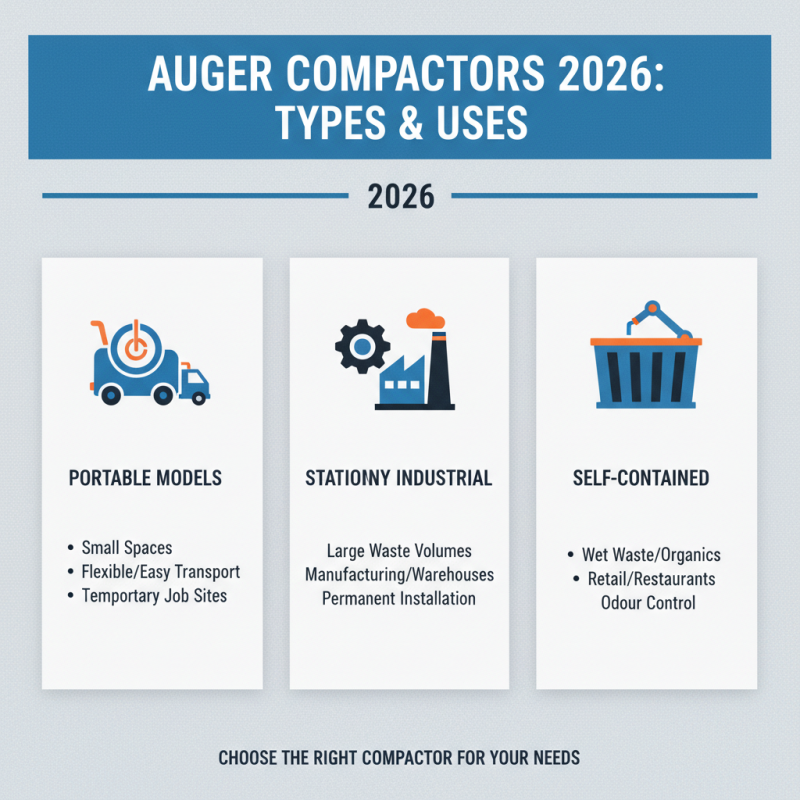
When selecting an auger compactor, understanding the varieties available is crucial. In 2026, several models cater to different waste management needs. Each type often excels in unique environments and applications. For instance, portable auger compactors are ideal for smaller spaces. They offer flexibility and ease of transport, making them suitable for temporary job sites.
On the other hand, stationary auger compactors are designed for high-volume operations. They are more robust, handling larger types of waste. These machines often perform better in industrial settings where durability is key. Additionally, some models feature advanced technology for increased efficiency and reduced energy consumption. However, not all innovations guarantee better outcomes; some users may find they complicate simple tasks.
Consider maintenance requirements too. Compactors with many features might need more frequent service. This can lead to downtime, which affects productivity. Reflecting on the balance between capability and complexity can help in making a better choice. Always evaluate your specific needs against the available options to find the right fit for your operations.
Evaluating the Size and Capacity Needs for Your Specific Applications
When choosing the right auger compactor, size and capacity are crucial.
First, assess your specific application. For construction sites, you might require a compactor with a
capacity of at least 2 cubic yards. This ensures efficient
compaction of soil, asphalt, or debris. Industry reports indicate that larger compactors, typically over
3,000 lbs, achieve optimal results for heavy-duty tasks.
Next, think about the material you will be compacting. For example, if you're working with
lighter materials, a smaller, portable model might suffice. Compacting loose materials
requires a different approach than compacting dense, cohesive soils.
A recent study showed that the right size auger can improve efficiency by up to 30%.
Misjudging capacity can lead to poor results and wasted resources.
Always refer to the manufacturer's specifications and user guides. These resources provide valuable
insights into operational limits. Consider your team’s experience as well. New operators may need
more straightforward, smaller units. When in doubt, consult with industry professionals or experienced operators.
Their insights can prevent costly mistakes and enhance overall project performance.
Assessing Power Sources: Electric vs. Gas Auger Compactors
When selecting an auger compactor, understanding power sources is essential. The two main options are electric and gas-powered models. Electric models are quiet and environmentally friendly. They work well for indoor projects. However, their power might not suffice for tougher jobs. Power outages can also disrupt work schedules.
On the other hand, gas augers deliver more muscle. They provide higher torque and can handle dense soil. These are ideal for outdoor use or construction sites. Yet, gas-powered machines require regular maintenance. This includes checking fuel levels and ensuring the engine functions well. They can also be noisy and produce emissions.
Consider your specific needs when choosing. Do you prioritize power or convenience? A Skid Loader Auger, for instance, can be paired with both types, offering versatility. However, assessing your primary tasks helps in making a reliable choice. Think about the job site conditions too. Factors like soil type and size of the project matter.
2026 How to Choose the Right Auger Compactor for Your Needs? - Assessing Power Sources: Electric vs. Gas Auger Compactors
| Feature |
Electric Auger Compactor |
Gas Auger Compactor |
| Power Source |
Electric (Plug-in) |
Gasoline |
| Power Output |
3-5 HP |
5-10 HP |
| Weight |
200-400 lbs |
300-600 lbs |
| Noise Level |
Low (60-70 dB) |
High (80-100 dB) |
| Maintenance |
Low |
Moderate to High |
| Mobility |
Limited (Corded) |
High (Portable) |
| Typical Use Cases |
Residential and Light-Duty Tasks |
Commercial and Heavy-Duty Applications |
| Cost |
$800 - $1,500 |
$1,500 - $3,000 |
Analyzing Material Types for Effective Compaction Performance
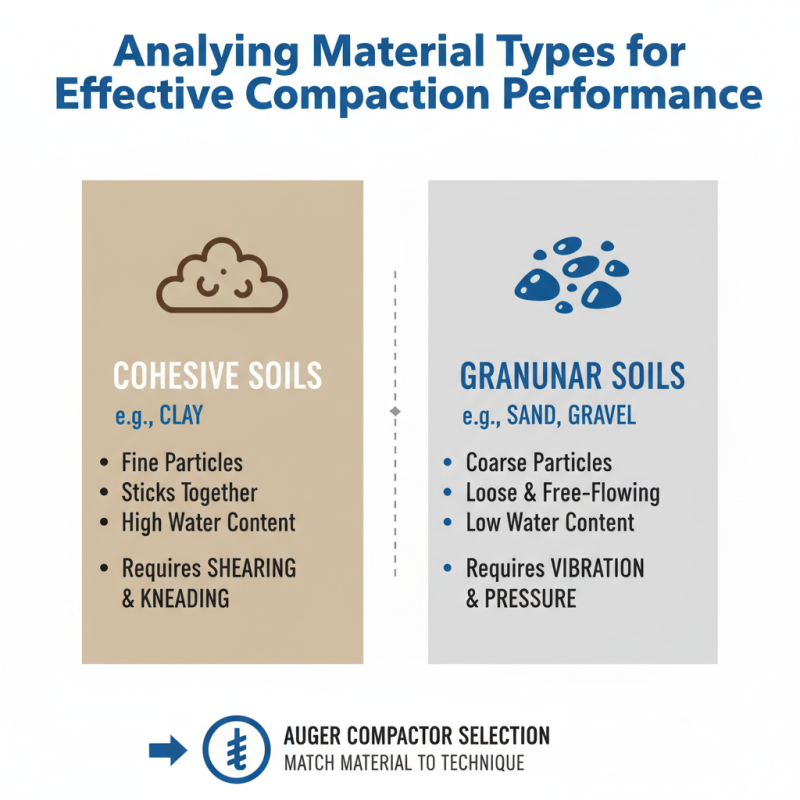
When selecting an auger compactor, understanding the material types is crucial. Different materials require different compaction techniques. For instance, cohesive soils like clay behave differently than granular soils. Knowing how your target material reacts to compaction will guide your choice.
A Skid Steer Auger Bit can effectively compact various materials. It works well in cohesive soils, providing the necessary torque. However, it struggles with rocky terrain. Assess your soil's composition before selecting equipment. Conduct tests if needed—this helps determine the right auger type.
Consider environmental factors too. Wet conditions can make clay soggy and difficult to compact. In contrast, dry sands may lead to loose particles under pressure. Every job site is unique. Adjusting your approach based on these factors is key to success. Always review previous experiences and be ready to adapt.
Reviewing Industry Standards and Compliance Regulations
When selecting an auger compactor, understanding industry standards and compliance regulations is crucial. Manufacturers often follow specific guidelines to ensure safety and efficiency. These standards cover everything from the machinery's design to operational protocols. For instance, noise levels and emissions must fall within acceptable limits. Reviewing these regulations can be overwhelming. However, having a good grasp of them protects both the operator and the environment.
Consider the various compliance certifications relevant to auger compactors. Specific models, like the Skid Steer Stump Auger, may come with additional features tailored for specialized tasks. Not all machines will meet the same standards. Some might excel in certain areas while lacking in others. Examine the performance in real-world applications. User feedback can highlight issues or strengths not covered by technical specifications. This reflection can help you choose the right equipment for your needs.
Cost versus Benefits: Making a Budget-Friendly Decision for Auger Compactors
When considering an auger compactor, cost is a significant factor. The initial investment can vary greatly. Understanding your budget can help in making the right choice. An economical option might suffice for smaller projects. Larger operations may require a more robust model. Balancing cost with features is essential.
Evaluate the long-term benefits. A cheaper model may lead to extra maintenance costs later. Reliability is key in heavy-duty tasks. You don't want downtime disrupting work schedules. Investing slightly more could enhance performance and durability. Consider operational costs, such as fuel and labor. These can add up quickly.
Assess the specific needs of your projects. Do you need a compact unit for tight spaces? Or a powerful model for larger sites? Reflect on these questions. The right compactor improves efficiency. Skipping this step might lead to regrets down the line. Always weigh what you gain against what you spend.
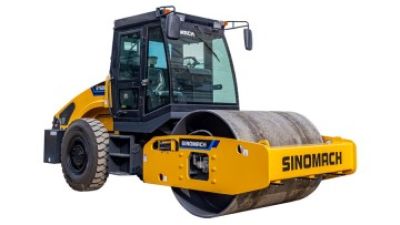
Maximizing Efficiency and Performance with the GYS08J Single Drum Vibratory Compactor for Construction Projects
The GYS08J Single Drum Vibratory Compactor stands out as a powerful solution for enhancing efficiency and performance in various construction projects. Its 8-ton heavy-duty single-drum design excels in delivering high linear pressure and robust vibration force, making it particularly effective for layered subgrade compaction and achieving a smooth final asphalt surface. This compactor is an ideal choice for those looking to optimize their construction processes, combining strength with ease of use.
With a mechanical transmission system that prioritizes simplicity and reliability, the GYS08J adapts readily to different materials, thanks to its two-stage amplitude adjustment. This feature is crucial for working effectively with varying types of soil, such as clay and gravel. Key applications include highway subgrade compaction, density enhancement for municipal road surfaces, slope compaction in earthworks, and supplemental compaction in confined areas, showcasing its versatility on various job sites.
Moreover, the machine's design addresses challenging hilly terrains, maintaining performance on slopes of up to 30%. The roller's drum width not only ensures uniform surface smoothness but also maximizes the efficiency of compaction across diverse construction environments, making it an essential tool for modern construction projects.
FAQS
: In 2026, there are portable and stationary auger compactors. Each type serves unique waste management needs.
Portable auger compactors are flexible and easy to transport. They work well in smaller or temporary job sites.
Stationary auger compactors handle high-volume waste. They are robust and perform best in industrial environments.
Not necessarily. Some advanced features can complicate simple tasks and may not guarantee better outcomes for every user.
More features often mean more maintenance needs. Excessive downtime can affect productivity and increase operational costs.
Assess your specific application and the materials involved. Size and capacity must align with your compaction requirements.
Misjudging capacity can lead to inefficient results. It can also result in wasted resources and increased project costs.
Ensure your team uses the right size machine. Consult industry professionals to avoid mistakes and enhance efficiency.
Yes, simpler, smaller units are better for new operators. They provide an easier learning curve and better control.
Always check manufacturer specifications and user guides. These offer insights into the machine's operational limits and capabilities.
Conclusion
Choosing the right Auger Compactor is crucial for maximizing efficiency in various applications. When selecting an auger compactor, several factors need to be considered, including the type and size of the compactor that aligns with your specific requirements. It's essential to understand the different types of auger compactors available in 2026, assess size and capacity needs, and evaluate power sources, such as electric versus gas options.
Additionally, analyzing the types of materials you will be compacting ensures optimal performance. Compliance with industry standards and regulations is also a key factor to consider. Lastly, weighing the cost against the benefits helps in making an informed and budget-friendly decision. By carefully evaluating these elements, you can choose the most suitable auger compactor for your needs, ensuring effective and efficient compaction.